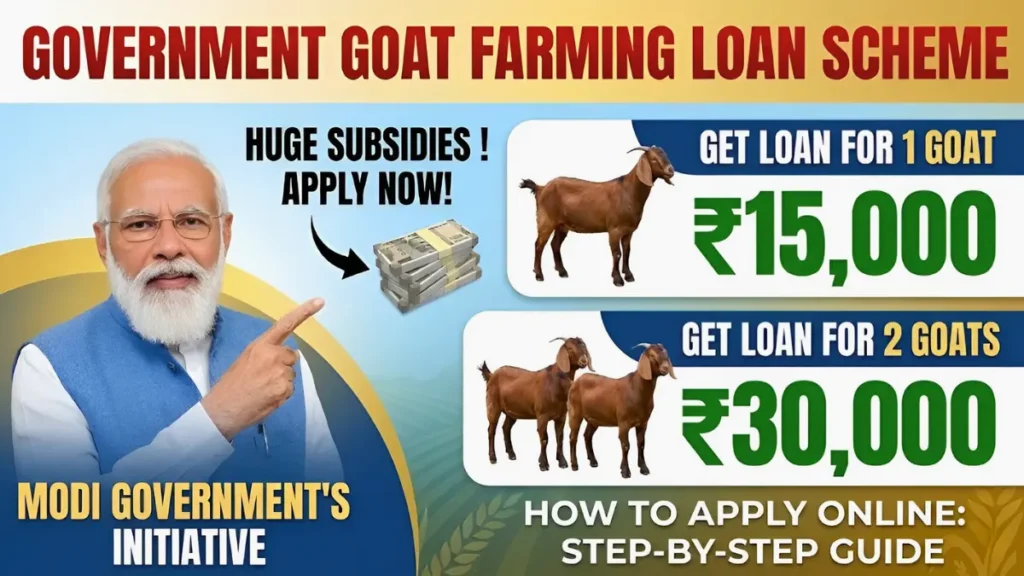
Bakri Palan Loan 2026: Bakri Palan Loan 2026 is creating fresh opportunities for rural entrepreneurs who want to build a steady income through goat farming. With growing demand for goat meat, milk, and organic manure, livestock-based businesses are gaining serious attention across India. To promote self-employment and strengthen rural economies, government-supported banks are offering loans with attractive subsidies that can go up to ₹2 lakh or more depending on the project size and category.
For many families, this scheme is not just financial assistance but a pathway toward long-term stability. If planned properly, goat farming can deliver quick returns with manageable risk. Here is a complete, updated, and detailed guide to help you understand eligibility, subsidy structure, profit scope, and the online application process in 2026.
Massive Opportunity For Rural Youth
Goat farming has become one of the fastest-growing livestock sectors in India. Unlike large dairy or poultry businesses, goat rearing requires relatively low initial investment and limited land. This makes it ideal for small farmers, unemployed youth, and women entrepreneurs. The Bakri Palan Loan 2026 is designed to encourage exactly this segment by providing financial backing and subsidy benefits.
Young entrepreneurs are increasingly turning to goat farming because goats adapt well to different climates and feed on easily available resources. With proper planning, even a small herd can generate consistent monthly income within a short period.
Subsidy Support That Reduces Burden
One of the biggest advantages of the scheme is the subsidy component. Depending on state policies and applicant category, subsidy rates may range between 25 percent and 50 percent of the approved project cost. In many cases, this support can reach up to ₹2 lakh.
For example, if your total project cost is ₹4 lakh, and you qualify for a 50 percent subsidy, half of that amount may be adjusted under government assistance. This significantly reduces repayment pressure and makes the venture financially safer. Reserved categories and women applicants may receive higher support percentages.
Eligibility Criteria You Must Know
To apply for the Bakri Palan Loan 2026, applicants must generally be Indian citizens aged 18 years or above. Most schemes prefer rural residents who have basic space for constructing a goat shed. Some states require applicants to complete short-term livestock management training before loan approval.
A stable bank account and satisfactory credit record improve approval chances. Priority is often given to small and marginal farmers, self-help group members, and first-time rural entrepreneurs. Meeting these criteria increases the probability of faster processing.
Documents Required For Approval
Before applying, prepare essential documents to avoid delays. These usually include Aadhaar card, voter ID or other identity proof, residence proof, passport-sized photographs, and bank account details. A detailed project report explaining herd size, expected expenses, and projected income is mandatory.
Some banks may request land ownership documents or lease agreements for the proposed farming site. Income certificate and caste certificate may also be required for applicants seeking higher subsidy benefits under reserved categories.
Simple Online Application Method
The application process in 2026 has become more streamlined. Many banks and state animal husbandry departments now provide online portals where applicants can register and submit forms digitally. After creating an account, fill in accurate personal and project details, then upload scanned documents.
Once submitted, officials review the application and may conduct a field inspection. If everything meets the guidelines, the loan is sanctioned and subsidy adjustments are processed according to scheme norms.
Choosing The Right Goat Breeds
Selecting suitable goat breeds plays a major role in profitability. Meat breeds such as Boer or Black Bengal are popular for fast growth and high demand. Dairy breeds like Jamunapari or Sirohi are known for milk production.
Farmers should choose breeds based on local climate, market demand, and available feed resources. Proper vaccination, regular health checkups, and hygienic shelter conditions ensure better survival rates and higher returns.
Estimated Investment And Returns
A small-scale goat farming project with 20 goats may require an investment between ₹2 lakh and ₹4 lakh depending on infrastructure and breed quality. This includes shed construction, feed expenses, medical care, and insurance. With proper management, farmers can start earning income within six to eight months through goat sales and breeding cycles.
Over time, herd expansion further increases revenue. Organic manure from goats can also be sold to local farmers, adding another income stream.
Risk Management And Insurance
While goat farming is profitable, it is important to manage risks carefully. Diseases, poor nutrition, and extreme weather conditions can affect productivity. That is why livestock insurance is strongly recommended. Many government-supported schemes include insurance coverage within the project cost.
Regular vaccination schedules, balanced feed, and clean water supply reduce the chances of loss. Maintaining detailed records of expenses and earnings also helps in monitoring profitability.
Training Builds Strong Foundation
Many states conduct livestock training programs through veterinary departments. These sessions cover feeding patterns, breeding techniques, disease prevention, and shed management. Completing such training enhances knowledge and boosts confidence.
Banks often consider trained applicants more reliable because they demonstrate commitment and understanding of livestock management. Practical knowledge significantly improves survival rates and financial outcomes.
Smart Marketing Increases Income
Successful goat farming does not end with production; marketing plays a key role. Farmers can sell goats directly to local traders, during festive seasons, or through livestock markets. Some entrepreneurs also connect with restaurants and meat suppliers for regular demand.
Branding your farm and maintaining healthy livestock builds trust among buyers. Maintaining proper weight and health standards ensures better pricing in competitive markets.
Long Term Financial Stability
Bakri Palan Loan 2026 is not just about starting a small business; it is about building long-term financial independence. Goat farming offers recurring income through breeding cycles and milk production. As herd size increases gradually, income potential grows without proportionally increasing costs.
Timely loan repayment strengthens your financial profile and opens doors for future expansion loans. With disciplined management, this scheme can transform rural livelihoods.
Final Word On Bakri Palan Loan
Bakri Palan Loan 2026 offers a powerful opportunity for rural families and aspiring entrepreneurs who want to create a stable income source. With subsidies that may reach up to ₹2 lakh, simplified online application systems, and growing market demand for goat products, the scheme provides a strong foundation for success.
Careful planning, proper training, and responsible financial management are the keys to maximizing benefits. For those ready to commit to livestock farming, this government-supported initiative can become a stepping stone toward economic security and self-reliance in 2026 and beyond.
Disclaimer: This article is for informational purposes only. Loan terms, subsidy amounts, and eligibility criteria may vary by state and bank. Always verify details with official government sources before applying.
