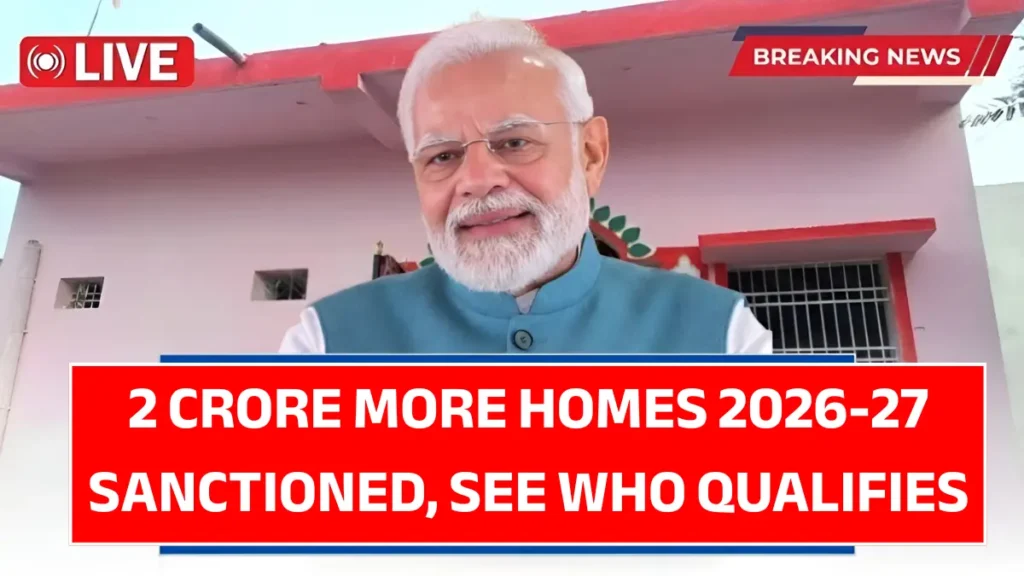
PM Awas Yojana Gramin 2026: PM Awas Yojana Gramin 2026 has entered a powerful new phase with the approval of 2 crore additional rural homes, bringing renewed attention to India’s mission of ensuring safe housing for every deserving family. For millions living in fragile kutcha houses or temporary shelters, this expansion is more than just a policy update. It represents security, dignity, and long-term stability. As rural development continues to remain a national priority, understanding who qualifies and how the scheme works has become more important than ever.
Massive Housing Push Gains Momentum
The approval of 2 crore more houses under PM Awas Yojana Gramin 2026 marks one of the largest rural housing expansions in recent years. The government has accelerated efforts to identify homeless and inadequately housed families across villages. This move aims to reduce the rural housing shortage significantly while improving living standards. With a sharper focus on transparency and faster construction timelines, the scheme is now positioned as a central pillar of rural welfare and infrastructure development.
Clear Focus On Rural Poor
The scheme specifically targets economically weaker rural households. Families living in one or two-room kutcha houses with mud walls or thatched roofs fall under priority consideration. Landless laborers, manual workers, marginalized communities, and households without stable income sources are also included. The objective is to support families who genuinely lack proper shelter rather than those seeking housing upgrades. This targeted approach ensures benefits reach those who need them most.
Updated Eligibility Criteria Explained
Eligibility is primarily determined using verified rural household data and local-level verification by Gram Panchayats. Families without a permanent pucca house anywhere in India are considered eligible. Households owning motorized vehicles, large agricultural land, or paying income tax are generally excluded. The criteria aim to filter out financially stable households while prioritizing vulnerable families. Beneficiary lists are prepared after verification to maintain fairness and accuracy.
Financial Assistance That Makes Impact
Under PM Awas Yojana Gramin, eligible beneficiaries receive financial assistance to construct a durable pucca home. The assistance amount in plain areas is typically up to ₹1.20 lakh, while beneficiaries in hilly or difficult terrain regions can receive up to ₹1.30 lakh. Funds are released in installments linked to construction stages. This phased payment structure ensures that the house is completed properly while preventing misuse of funds.
Additional Support Beyond Housing
The scheme is designed to provide more than just walls and a roof. Beneficiaries are often linked to toilet construction support under sanitation programs, ensuring better hygiene standards. Wage support through employment schemes such as MGNREGA may also be provided for certain construction workdays. This integrated support model helps rural families build a complete and dignified living space rather than just a basic structure.
Women Ownership Brings Empowerment
One of the most impactful features of the scheme is that houses are preferably registered in the name of the female head of the household or jointly with her spouse. This policy strengthens women’s financial security and social standing within rural communities. Property ownership enhances confidence and stability for women while protecting family interests. The focus on women’s ownership reflects a broader vision of inclusive rural empowerment.
Transparent Digital Monitoring System
PM Awas Yojana Gramin 2026 uses digital tools to monitor progress and ensure accountability. Houses are geo tagged during various construction stages to track real-time development. Payments are transferred directly to beneficiaries’ bank accounts through direct benefit transfer systems. This reduces middlemen involvement and ensures funds reach the rightful recipient. Digital transparency has significantly improved trust and reduced delays in implementation.
Faster Construction Timelines Ahead
The government has emphasized speeding up the construction process under the new expansion. With improved coordination between state governments and village authorities, completion timelines are expected to improve. Technical guidance is also provided to ensure houses are structurally sound and disaster resistant where necessary. The aim is not only to build houses quickly but to build them safely and sustainably for long term use.
Boost To Rural Employment Opportunities
The sanctioning of 2 crore additional homes is expected to generate substantial employment in rural areas. Construction activity increases demand for local labor, masons, carpenters, and suppliers of building materials. This circulation of funds stimulates the rural economy and strengthens village level markets. The housing expansion thus contributes to economic growth while addressing basic shelter needs at the same time.
Simple Steps To Check Status
Families who believe they qualify can check their status at their Gram Panchayat office. Beneficiary lists are publicly displayed to maintain transparency. If a deserving family is not listed, they can approach local authorities for verification. Ensuring Aadhaar linkage and updated bank details is important for smooth fund transfer. Keeping required documents ready helps avoid unnecessary delays in approval or payment processing.
Stronger Focus On Quality Construction
Authorities are encouraging the use of improved construction techniques to ensure durability. Beneficiaries are guided on proper design layouts that include ventilation, sanitation space, and safe roofing materials. The objective is to avoid temporary solutions and instead provide long lasting homes. Technical supervision at different stages helps maintain construction standards and ensures public funds are used effectively.
Rural Transformation Through Housing
Housing plays a central role in improving health, education, and overall well being. A permanent pucca house protects families from extreme weather conditions and reduces health risks linked to damp or unstable structures. Children benefit from a secure environment that supports education and personal growth. PM Awas Yojana Gramin 2026 therefore contributes not just to shelter but to holistic rural transformation.
Final Verdict On Eligibility And Benefits
PM Awas Yojana Gramin 2026 is shaping up to be a defining step toward rural development with the sanctioning of 2 crore additional homes. The scheme prioritizes the most vulnerable households, ensures transparent selection, and promotes women’s ownership. For families still living in fragile or unsafe homes, this expansion offers a genuine opportunity for change. Eligible households should verify their status promptly and connect with local authorities. A secure home is more than a structure. It is the foundation for safety, dignity, and a stronger future for rural India.
Disclaimer: This article is for informational purposes only. Eligibility, benefits, and guidelines under PM Awas Yojana Gramin 2025 may change. Please verify details with official government sources or local authorities.
