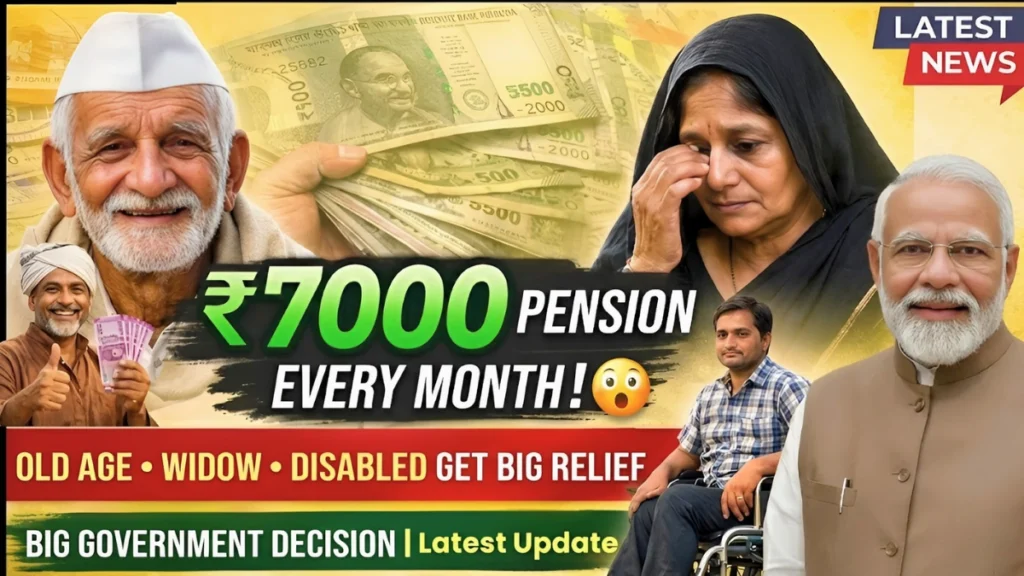
₹7,000 Monthly Pension Plan in 2026: ₹7,000 Monthly Pension Plan in 2026 is emerging as one of the most discussed social welfare updates among senior citizens and widows across India. With the cost of living steadily rising and healthcare expenses becoming heavier each year, a dependable monthly income can provide much-needed stability. Families are actively searching for accurate information about eligibility, benefits, and the application process. The proposed pension increase aims to strengthen financial protection for vulnerable groups and offer them greater confidence about their future.
A Major Boost For Social Security
The proposed ₹7,000 monthly pension represents a significant step forward in strengthening India’s social security framework. Many existing pension schemes currently provide lower monthly support, which often falls short of covering essential needs. By raising the amount to ₹7,000, authorities aim to address inflation pressures and improve the purchasing power of beneficiaries. This enhancement could make a noticeable difference in managing groceries, medicines, electricity bills, and other routine expenses without constant financial stress.
Why Seniors Need Stronger Support
Senior citizens often face limited income opportunities after retirement. For many, pensions are the only dependable source of funds. Medical needs increase with age, and unexpected hospital visits can quickly strain savings. A monthly pension of ₹7,000 can help reduce dependency on children or relatives. Financial independence also promotes emotional well-being. Knowing that a fixed amount arrives every month provides stability and allows seniors to plan their expenses more confidently.
Special Focus On Widows
Widows from economically weaker sections are expected to be key beneficiaries of this plan. Losing a spouse often leads to financial uncertainty, especially if there was no regular income source. The ₹7,000 monthly support could help widows manage daily living costs, education expenses for children, and healthcare needs. This pension is not just financial assistance but a recognition of their need for dignity, security, and equal participation in society without constant hardship.
Eligibility Conditions Explained Clearly
Eligibility criteria are likely to include age limits, income thresholds, and residency requirements. Senior citizens may need to meet a minimum age benchmark, typically defined by state or central guidelines. Widows must provide necessary documentation, including proof of identity, residence, and marital status. Income limits will likely ensure that the scheme benefits those from economically weaker households. Clear eligibility rules are essential to ensure transparency and fair distribution of funds.
Required Documents And Verification
Applicants are expected to submit documents such as Aadhaar card, bank account details, income certificate, and proof of residence. Widows may also need to provide a husband’s death certificate. Verification processes are likely to be streamlined to reduce delays. Digital systems may help authorities cross-check data efficiently. Ensuring documents are accurate and updated will be crucial for faster approvals and smooth monthly transfers once the scheme is implemented.
Simple Application Process Ahead
The application process is expected to be accessible both online and offline. Beneficiaries may apply through official government portals, local welfare offices, or designated service centers. Online applications can save time and reduce travel for elderly applicants. After submission, authorities will review documents and confirm eligibility. Once approved, the pension amount is typically credited directly to the registered bank account every month, ensuring consistent and transparent payments.
Direct Benefit Transfer System
One of the strongest pillars of modern pension schemes is the Direct Benefit Transfer system. Under this framework, the pension amount is deposited directly into the beneficiary’s bank account without intermediaries. This minimizes delays and reduces the risk of fraud or leakage. Seniors and widows can withdraw funds through banks, ATMs, or digital platforms. The system ensures accountability and allows beneficiaries to track payments easily.
Financial Impact On Households
A ₹7,000 monthly pension can significantly influence household stability. For families supporting elderly parents, this income can reduce financial strain and allow better allocation of resources. It can cover essentials such as nutritious food, medicines, and utility bills. For widows managing households independently, this support provides breathing space and long-term confidence. Even a modest but regular income can transform daily life and improve overall living standards.
Addressing Rising Living Costs
Inflation continues to impact essential commodities including food grains, cooking gas, electricity, and healthcare services. The proposed pension increase appears designed to match these growing expenses. By aligning pension support with current economic realities, authorities aim to ensure beneficiaries maintain basic living standards. Adequate financial assistance reduces vulnerability and protects seniors and widows from slipping deeper into poverty due to rising prices.
Transparency And Accountability Measures
To maintain public trust, transparency in implementation will be critical. Authorities are expected to maintain digital records of beneficiaries and publish clear guidelines. Helpline numbers and grievance redressal mechanisms may be introduced to resolve issues related to delayed payments or application errors. Regular monitoring can help prevent misuse and ensure funds reach intended recipients. A transparent system strengthens confidence among beneficiaries and their families.
Awareness And Information Campaigns
For any welfare scheme to succeed, awareness plays a vital role. Information campaigns through local offices, community centers, and digital platforms may help ensure eligible individuals do not miss out. Seniors who are not comfortable with technology can receive assistance from local service centers. Clear communication regarding deadlines, documentation, and eligibility will help prevent confusion and unnecessary rejection of applications.
Long Term Social Benefits
Beyond individual households, the ₹7,000 pension plan could create broader social benefits. Financial security among elderly citizens reduces dependence on informal borrowing and community assistance. It strengthens local economies as pension funds are typically spent on daily needs within neighborhoods. Supporting widows and seniors also reflects a commitment to inclusive development. Strong social welfare systems contribute to overall societal stability and reduce inequality.
Final Word: ₹7,000 Monthly Pension Plan in 2026
The proposed ₹7,000 Monthly Pension Plan in 2026 represents a meaningful step toward enhancing financial security for senior citizens and widows. By focusing on direct bank transfers, simplified applications, and transparent eligibility criteria, the scheme aims to provide dependable support to vulnerable groups. If implemented effectively, it can ease financial burdens, promote dignity, and improve quality of life for millions. Staying informed through official announcements will be essential for those planning to apply and benefit from this promising initiative.
Disclaimer: This article is for informational purposes only. Pension details may change based on official government notifications. Readers are advised to verify eligibility, benefits, and updates through authorized government sources before applying.
