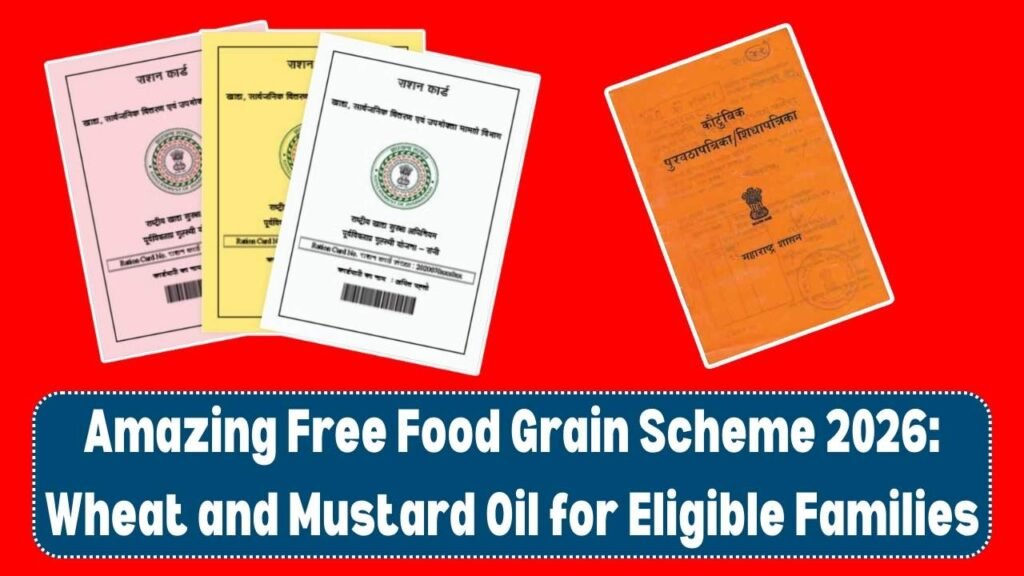
Amazing Free Food Grain Scheme 2026: Rising food prices continue to stretch household budgets, especially for low and middle-income families. Essentials like wheat, cooking oil, and daily groceries are becoming more expensive every year. In this situation, the Amazing Free Food Grain Scheme 2026 is emerging as a major support system for eligible families. With the promise of free wheat and mustard oil, the scheme is designed to reduce financial pressure and strengthen food security. Here is a complete, fresh, and detailed look at what this initiative offers and why it matters in 2026.
Massive Boost To Food Security
The core objective of the Free Food Grain Scheme 2026 is to strengthen food security at the grassroots level. By providing free wheat and mustard oil, the government aims to ensure that no eligible household goes hungry. Food security is not just about filling plates but about creating stability in uncertain economic times. This scheme focuses on consistent monthly supply, ensuring that families can depend on a reliable support system instead of worrying about fluctuating market prices.
Free Wheat Every Month
Under the scheme, eligible beneficiaries will receive a fixed quantity of wheat per family member every month. The allocation is expected to follow updated population data linked to ration cards. Wheat remains one of the most widely consumed staples in the country, forming the base of daily meals such as chapati and roti. Regular distribution through fair price shops ensures accessibility even in remote villages, helping families maintain their basic dietary needs without extra spending.
Mustard Oil For Daily Cooking
The inclusion of mustard oil is one of the most talked-about highlights of this scheme. Cooking oil prices have seen sharp increases over the past few years, making it difficult for many families to afford quality oil. Mustard oil, known for its strong flavor and nutritional value, is commonly used in many regions. By adding oil to the ration basket, the scheme goes beyond grain distribution and supports complete meal preparation at home.
Who Qualifies In 2026
Eligibility under the Amazing Free Food Grain Scheme 2026 is primarily linked to income level and ration card category. Families classified under priority households or economically weaker sections are likely to benefit. Updated Aadhaar linkage and verified family data may be required to ensure transparency. State governments may also introduce additional verification measures to prevent misuse. Beneficiaries are advised to keep their documents updated to avoid interruptions in receiving free wheat and oil.
Transparent Digital Distribution
Technology plays a major role in improving the efficiency of ration distribution in 2026. Many states now use biometric authentication at fair price shops to verify beneficiaries. This system reduces duplication and ensures that only genuine recipients receive benefits. Digital tracking of stock movement also helps minimize leakage and corruption. The result is a smoother, faster, and more transparent distribution process that increases public trust in welfare schemes.
Relief From Rising Inflation
Food inflation has been a growing concern, especially for daily wage workers and rural households. The cost of wheat flour and cooking oil directly impacts monthly budgets. By providing these items free of cost, the scheme reduces financial stress and allows families to allocate money toward other needs such as education, healthcare, or savings. This relief becomes particularly important during periods of economic uncertainty and unpredictable price fluctuations.
Strengthening Rural Communities
Rural areas often face supply challenges and limited earning opportunities. The Free Wheat and Mustard Oil Scheme 2026 ensures that even families in distant villages receive consistent support. Fair price shops act as local distribution hubs, reducing travel costs and time for beneficiaries. By securing access to basic food items, the scheme indirectly strengthens rural stability and reduces migration pressures caused by financial hardship.
Supporting Urban Poor Households
Urban low-income families also struggle with high living costs, including rent, electricity, and transportation. Grocery expenses take up a large share of their income. Free wheat and mustard oil provide meaningful relief in cities where daily expenses are significantly higher. For slum residents and informal workers, this scheme can make a noticeable difference in managing household budgets and maintaining nutritional standards.
Improved Nutritional Balance
While wheat addresses hunger, mustard oil contributes to balanced cooking practices. Proper cooking oil is essential for preparing vegetables, lentils, and other nutritious meals. Access to free oil ensures that families do not compromise on meal quality due to high market prices. By combining staple grains with cooking essentials, the scheme moves toward a more holistic approach to food welfare rather than focusing on calories alone.
Easy Access Through Ration Cards
Ration cards remain the primary gateway for availing benefits under this scheme. Families must ensure their ration cards are active and correctly linked with identification details. In 2026, many states have simplified updating processes through online portals and local help centers. Beneficiaries can verify their eligibility status and distribution schedules easily. This streamlined system reduces confusion and ensures smoother monthly collection of free food grains.
Focus On Women And Families
Many welfare schemes now emphasize empowering women as primary beneficiaries. In several states, ration cards are issued in the name of the female head of the household. This approach enhances accountability and ensures that food grains directly benefit families. By providing essential kitchen items, the scheme supports women who manage household nutrition and budgeting, making it an indirect step toward social empowerment.
Long Term Welfare Vision
The Amazing Free Food Grain Scheme 2026 is not just a temporary relief measure but part of a broader welfare vision. Food assistance programs aim to create stability while governments work on employment generation and income growth. Ensuring that basic food needs are met allows families to focus on improving their livelihoods. Over time, such schemes can contribute to reducing poverty levels and enhancing overall social development.
Key Steps To Apply
Families who believe they are eligible should first verify their ration card category and income status. Updating Aadhaar linkage and household member details is crucial. Visiting the nearest fair price shop or local administrative office can provide clarity regarding enrollment. In many regions, online portals offer application tracking services. Staying informed through official announcements ensures that beneficiaries do not miss out on their monthly entitlements.
Monitoring And Accountability Measures
To prevent misuse, authorities have introduced strict monitoring systems in 2026. Regular audits of stock levels, digital transaction records, and grievance redressal mechanisms help maintain accountability. Beneficiaries can report issues such as underweight distribution or denial of ration through helpline numbers or local offices. These measures improve efficiency and protect the rights of eligible families under the scheme.
Final Word: Amazing Free Food Grain Scheme 2026
The Amazing Free Food Grain Scheme 2026 stands as a strong pillar of social support during challenging economic times. By providing free wheat and mustard oil to eligible families, it addresses both hunger and daily cooking needs in a practical way. With transparent distribution, digital monitoring, and a focus on vulnerable households, the scheme promises real relief. For families struggling with rising costs, this initiative offers not just food assistance but financial breathing space and renewed stability for the year ahead.
Disclaimer: This article is for informational purposes only. Scheme details, eligibility, and benefits may vary by state or official updates. Readers should verify information through authorized government sources before applying.
