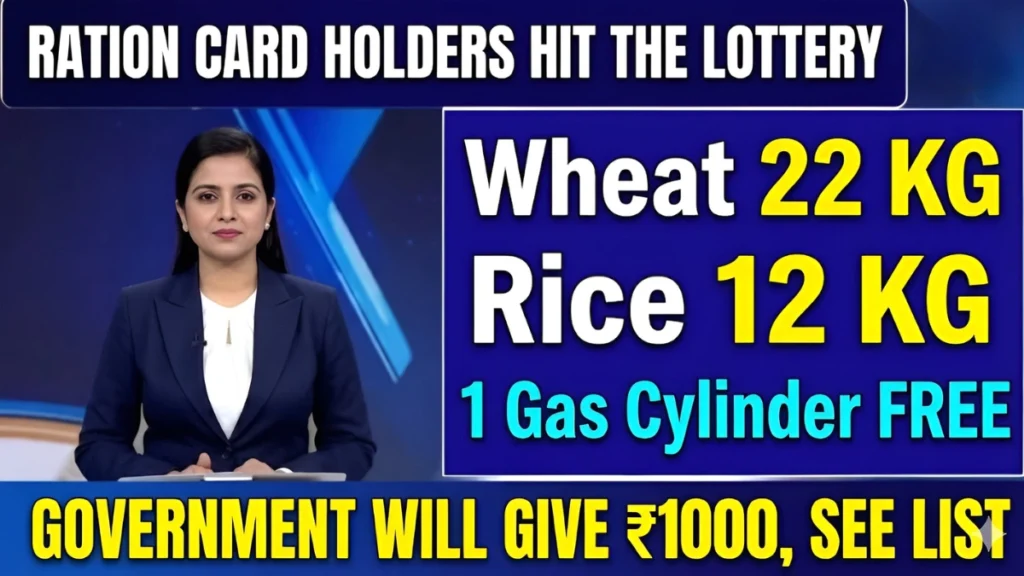
Government Ration Scheme Update: Rising household expenses have made government welfare schemes more important than ever for millions of families. The latest update to the Government Ration Scheme has created widespread attention because it combines two powerful forms of relief: a free LPG cylinder and ₹1000 financial assistance for eligible ration card holders. For families managing tight monthly budgets, this announcement is not just another policy update. It represents practical support that directly impacts daily living costs, especially cooking fuel and essential household spending.
This detailed guide explains how the scheme works, who qualifies, what documents are required, and how beneficiaries can ensure they receive the benefits without delays.
Major Boost For Low Income Families
The updated ration scheme focuses on strengthening economic support for vulnerable households. Food grain subsidies under the Public Distribution System already help millions, but rising LPG prices and inflation have increased financial pressure. By adding a free LPG cylinder and direct cash assistance, the government aims to ease multiple burdens at once.
This move is especially impactful for families who depend heavily on subsidized supplies. Cooking fuel is a recurring expense, and eliminating even one refill cost provides noticeable savings. Combined with ₹1000 in direct support, the scheme creates a meaningful financial cushion.
Free LPG Cylinder Brings Real Savings
Cooking gas remains one of the most essential household utilities. For many low income families, refilling an LPG cylinder can disrupt monthly budgeting. Under the updated scheme, eligible ration card holders may receive one LPG cylinder free of cost, depending on state-level implementation rules.
The benefit is typically provided through linked LPG consumer accounts. Beneficiaries must ensure that their ration card details match their LPG connection details. In many cases, the subsidy may be credited directly to the bank account linked with the LPG ID, making the process transparent and traceable.
Direct Cash Transfer Of ₹1000
In addition to fuel support, ₹1000 financial assistance may be transferred directly into beneficiaries’ bank accounts. This is generally processed through the Direct Benefit Transfer system to minimize delays and eliminate intermediaries.
The financial assistance can help families cover urgent needs such as groceries, school supplies, medicine, or utility bills. For daily wage earners and low income workers, this support can stabilize household finances during periods of uncertainty or rising market prices.
Ensuring Aadhaar linkage with bank accounts is crucial for smooth credit of funds.
Who Qualifies Under The Scheme
Eligibility criteria play a central role in receiving benefits. Typically, priority ration card holders, Antyodaya Anna Yojana card holders, and families categorized under economically weaker sections are considered.
Factors that may determine eligibility include:
• Annual family income
• Ration card category
• Registration in existing welfare databases
• Aadhaar and bank account linkage
• Valid LPG consumer number
State governments may refine these rules based on local needs and budget allocation. Beneficiaries should verify eligibility through official government notifications rather than relying on rumors.
Required Documents And Verification
Proper documentation ensures smooth processing of benefits. Most beneficiaries may need the following:
• Valid ration card
• Aadhaar card of head of family
• Bank account details
• LPG consumer ID
• Registered mobile number
Some states may require biometric verification at fair price shops. It is important to keep all records updated and free from spelling errors or mismatched information. Even small inconsistencies can delay benefit transfers.
How To Check Benefit Status
Beneficiaries can usually track their scheme status through state government portals or local ration offices. Online systems often allow users to check:
• Ration card validity
• LPG linkage status
• Payment transfer confirmation
• Distribution updates
SMS alerts may also notify beneficiaries when funds are credited or cylinders are approved. Regular monitoring ensures that eligible families do not miss important updates or deadlines.
Impact On Household Budget Planning
The combined value of a free LPG cylinder and ₹1000 assistance creates measurable financial relief. For a family that spends a significant portion of income on fuel and food, this support can reduce monthly stress.
Instead of adjusting essential expenses or borrowing money for gas refills, families can redirect saved funds toward health, education, or savings. Welfare programs like this are designed to strengthen household stability and prevent financial vulnerability from deepening.
Transparency And Digital Monitoring
Modern welfare programs increasingly rely on digital tracking systems to improve transparency. Direct bank transfers reduce the risk of leakage and ensure that benefits reach the intended recipients.
Digital records also allow authorities to monitor distribution patterns and eliminate duplicate entries. Beneficiaries are encouraged to maintain updated contact information and ensure their mobile numbers remain active to receive notifications.
Digital integration has made welfare delivery faster and more accountable.
Avoiding Fraud And Fake Announcements
Whenever major government benefits are announced, fraudulent messages often circulate. Beneficiaries should remain cautious about calls or SMS messages asking for OTPs or personal banking information.
Important safety tips include:
• Never share OTPs with unknown callers
• Verify information only through official sources
• Do not pay fees for benefit registration
• Cross check announcements at ration offices
Genuine government schemes do not require private payments for enrollment.
State Level Implementation Differences
Although the core idea of the scheme may remain similar, state governments often implement variations. The number of free cylinders, timing of financial assistance, and eligibility verification process may differ slightly.
Some states may roll out benefits in phases, prioritizing the most vulnerable households first. Therefore, staying updated through local authorities is important for accurate information.
Understanding regional implementation ensures beneficiaries know exactly what to expect.
Strengthening Social Security Network
The ration system has long served as a backbone for food security in India. Adding LPG and cash assistance enhances its effectiveness by addressing broader household needs.
Fuel security is closely connected to health and safety. Encouraging LPG use reduces dependence on traditional fuels like wood or coal, which can cause indoor air pollution. Financial assistance further empowers families to manage emergencies without falling into debt.
Such integrated welfare measures contribute to long term social stability.
Final Word: Government Ration Scheme Update
The Government Ration Scheme update offering a free LPG cylinder and ₹1000 financial assistance reflects a focused effort to support vulnerable households during times of economic pressure. By combining fuel relief with direct cash transfers, the scheme addresses both immediate and recurring expenses.
Eligible ration card holders should ensure their documents are updated, bank accounts are linked, and LPG connections are properly registered. Staying informed through official announcements will help avoid confusion and delays.
For millions of families, this initiative is more than just financial aid. It is structured support designed to reduce stress, strengthen household budgets, and improve overall quality of life in a practical and meaningful way.
Disclaimer: This article is for informational purposes only. Scheme details, eligibility, and benefits may vary by state. Readers should verify official government sources for accurate, updated information before taking action.
