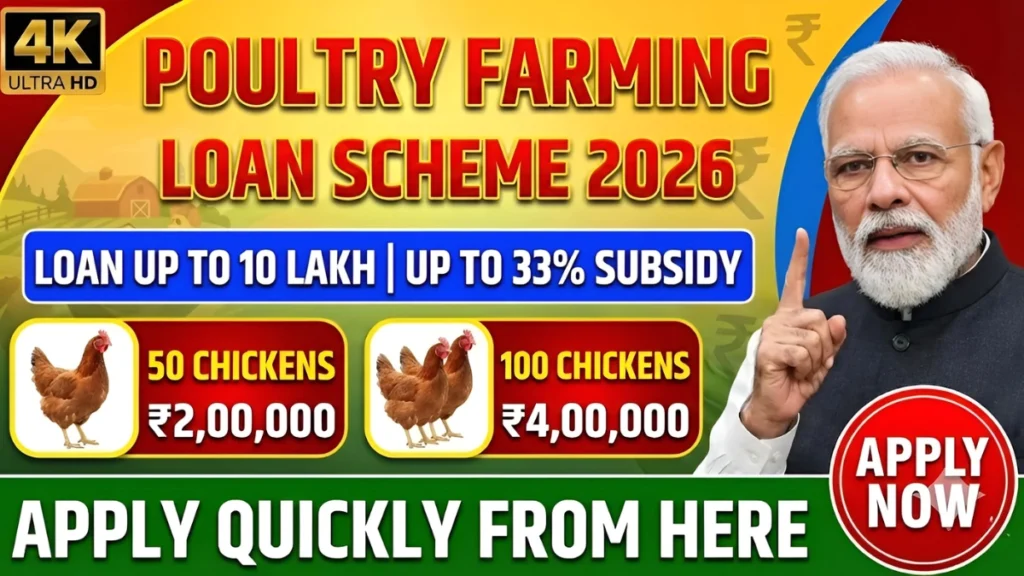
PMEGP Poultry Loan Scheme: Rural entrepreneurship is gaining serious momentum across India, and poultry farming is emerging as one of the most practical and profitable ventures for small farmers. With rising demand for protein-rich food, eggs and chicken consumption continues to grow in both urban and semi-urban markets. The PMEGP Poultry Loan Scheme is creating a strong financial backbone for individuals who want to step into this business but lack capital support. This government-backed initiative is not just a loan program, it is a gateway to self-employment, stable income, and long-term financial independence for thousands of aspiring entrepreneurs.
The scheme operates under the Prime Minister’s Employment Generation Programme, which is designed to promote micro-enterprises across sectors. Poultry farming qualifies as a viable activity under this program, making it easier for first-time entrepreneurs to secure funding with subsidy benefits.
Turn Your Farm Into Profit Hub
Poultry farming is no longer limited to backyard activity. With proper planning and modern management practices, it can be transformed into a structured agribusiness model. Broiler farming offers faster returns within weeks, while layer farming ensures steady egg production over months. Farmers can generate continuous cash flow if production cycles are managed properly. With PMEGP financial assistance, entrepreneurs can invest in high-quality chicks, automated feeding systems, ventilation setups, and hygienic sheds that increase survival rates and productivity.
Government Backed Financial Boost
The PMEGP scheme provides financial assistance through banks with a built-in subsidy component that reduces repayment pressure. Manufacturing sector projects, including poultry units, can receive funding up to ₹25 lakh. The margin money subsidy ranges from 15 percent to 35 percent depending on the applicant’s category and geographical location. Rural applicants and special category individuals often receive higher subsidy benefits. This structured support system makes poultry farming more accessible and financially viable for small entrepreneurs.
Eligibility Made Simple And Clear
The scheme is open to individuals above 18 years of age who wish to start a new micro-enterprise. Basic educational qualifications may apply for higher project costs. Self-help groups, registered trusts, and cooperative societies are also eligible. However, applicants who have already availed similar government subsidies under other schemes are generally not eligible. The program strongly encourages first-time entrepreneurs, especially unemployed youth in rural and semi-urban areas looking to build independent income sources.
Step By Step Application Journey
The application process is designed to be transparent and structured. Interested applicants must submit their application through the official PMEGP online portal. After submission, district-level committees evaluate the proposal based on feasibility and business viability. If approved, the proposal is forwarded to a bank for financial appraisal. Applicants are often required to undergo an Entrepreneurship Development Program training session before final loan disbursement. A well-prepared and realistic project report significantly improves approval chances.
Smart Project Planning Wins Approval
A detailed project report is the backbone of a successful application. It should clearly outline the type of poultry farming, number of birds, expected production capacity, feed management strategy, vaccination schedule, and marketing plan. Financial projections must include estimated expenses, operational costs, and projected profits. Banks prefer applicants who demonstrate knowledge of poultry health management and market demand. Consulting agricultural officers or experienced poultry farmers can strengthen the credibility of the proposal.
Investment Breakdown And Cost Planning
Starting a poultry unit involves initial expenses such as shed construction, equipment purchase, chick procurement, feed supply, water systems, and biosecurity arrangements. Operational costs include labor, electricity, vaccination, and maintenance. The PMEGP loan helps cover these capital expenses while the subsidy component reduces financial burden. Proper cost planning ensures that working capital is maintained throughout production cycles. Efficient budgeting helps avoid cash flow issues during the early stages of the business.
Income Potential And Growth Scope
The income potential of poultry farming depends largely on management efficiency and scale of operations. A well-managed broiler farm can generate consistent revenue every production cycle. Layer farms offer long-term income through egg sales. Farmers can also explore additional revenue streams such as manure sales and local distribution partnerships. With increasing consumer demand for fresh poultry products, there is ample room for expansion. Scaling up operations becomes easier once initial loans are managed effectively.
Risk Management And Sustainability Focus
Like any business, poultry farming carries certain risks including disease outbreaks, feed price fluctuations, and market price variations. Proper vaccination schedules, clean housing, and biosecurity measures significantly reduce health-related risks. Maintaining supplier diversity helps manage feed cost volatility. Sustainable waste management practices not only protect the environment but also improve farm hygiene. Long-term success depends on disciplined management and consistent monitoring of operational efficiency.
Training And Skill Development Advantage
Entrepreneurship Development Programs conducted under PMEGP provide valuable training on business management, financial planning, and operational efficiency. These sessions equip applicants with practical skills required to manage poultry enterprises successfully. Understanding record keeping, cash flow tracking, and inventory control improves profitability. Skill development enhances confidence and reduces dependence on external consultants. Farmers who actively participate in training programs often perform better in long-term business sustainability.
Rural Employment And Social Impact
Beyond individual income generation, poultry farming under PMEGP contributes to rural employment creation. Small units often require local labor for daily operations, creating job opportunities within villages. Increased income circulation strengthens rural economies and reduces migration pressure toward cities. Women entrepreneurs and self-help groups can also benefit significantly from poultry ventures, promoting financial inclusion and social empowerment in rural communities.
Final Word: PMEGP Poultry Loan Scheme
The PMEGP Poultry Loan Scheme stands as a powerful opportunity for farmers and first-time entrepreneurs who want to enter the agribusiness sector with structured financial support. The combination of accessible loans, attractive subsidies, and entrepreneurship training creates a solid foundation for long-term success. Poultry farming offers steady demand, scalable growth, and manageable operational requirements when handled responsibly. With careful planning, disciplined execution, and smart financial management, this scheme can transform small rural initiatives into thriving, income-generating enterprises that support families for years to come.
Disclaimer: This article is for informational purposes only. Loan terms, eligibility, and subsidy details may change as per government guidelines. Applicants should verify official updates before applying for any scheme.
