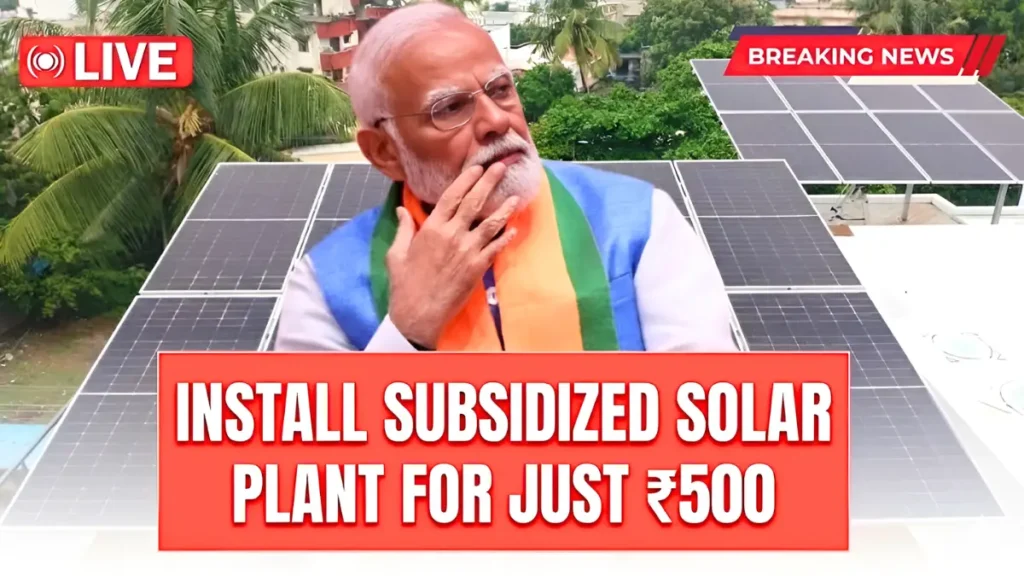
Solar Rooftop Subsidy Scheme: Electricity expenses have quietly become one of the biggest monthly burdens for middle-class families. From running fans and lights to powering refrigerators, air conditioners, and washing machines, every unit adds up. The Solar Rooftop Subsidy Scheme has emerged as a practical solution that not only reduces power bills but also offers government financial support of up to ₹78,000. With simplified online processes and faster approvals, installing rooftop solar panels is no longer complicated or limited to large cities. It is becoming a realistic opportunity for ordinary households to secure long-term savings while contributing to clean energy adoption.
Unlock Massive Solar Subsidy Benefits
The Solar Rooftop Subsidy Scheme is designed to encourage residential consumers to shift toward renewable energy. Under the latest structure, eligible households installing rooftop solar systems can receive substantial central financial assistance. For systems up to 3 kW capacity, the subsidy can significantly reduce upfront installation costs. In many cases, the total benefit may reach up to ₹78,000 depending on system size and approved capacity. This direct financial support makes solar installations more affordable than ever before.
Cut Electricity Bills Drastically
One of the biggest attractions of rooftop solar is the sharp reduction in electricity bills. Once your system begins generating power, your reliance on grid electricity decreases. During peak sunlight hours, your home runs primarily on solar energy. Over months and years, these savings accumulate into a substantial financial advantage. In high-consumption households, solar panels can reduce bills by a large percentage, helping families redirect their monthly budget toward other essential needs.
Understand System Capacity Smartly
Choosing the correct system size plays a crucial role in maximizing savings. A smaller household with moderate electricity usage may benefit from a 1 kW or 2 kW system. Larger families with multiple appliances may require 3 kW or higher capacity installations. The government subsidy is typically structured around system size, so selecting the right capacity ensures you receive optimal financial assistance. A professional site survey helps determine how much rooftop area is available and how much sunlight it receives daily.
Online Application Made Simple
The application process has become more streamlined and transparent. Residential consumers can apply through the official national solar rooftop portal. Applicants must register using their electricity consumer number and personal details. After submitting the application, approval is granted by the local distribution company. Once approved, installation must be carried out by an authorized vendor. After inspection and commissioning, the subsidy amount is transferred directly into the beneficiary’s bank account, ensuring transparency and efficiency.
Net Metering Multiplies Savings
Net metering is a powerful feature that enhances the financial viability of rooftop solar. When your solar panels generate more electricity than your home consumes, the excess power is exported to the grid. In return, you receive credits that adjust against future electricity bills. This means no solar energy goes to waste. Over time, net metering significantly improves cost recovery and shortens the payback period of your solar investment.
Eligibility Criteria You Must Know
The scheme mainly targets residential property owners with a valid electricity connection. The rooftop must be structurally sound and receive adequate sunlight without heavy shading from nearby buildings or trees. Individual house owners are primary beneficiaries, though housing societies can also apply under specific guidelines. It is important to ensure the electricity connection is active and in the applicant’s name to avoid delays in approval and subsidy disbursement.
Documents Required For Approval
Preparing the correct documents in advance helps avoid unnecessary delays. Applicants generally need a copy of their latest electricity bill, identity proof, address proof, bank account details, and a passport-sized photograph. Some states may require additional documentation depending on local rules. Ensuring that all submitted information matches official records is essential for smooth processing and faster release of subsidy funds.
Long Term Financial Gains Ahead
Rooftop solar panels typically have a lifespan of 20 to 25 years. Once installed, maintenance costs remain relatively low. Cleaning panels periodically and ensuring proper wiring checks are usually sufficient. After the initial investment is recovered through savings and subsidy benefits, the electricity generated becomes nearly free for the remaining years. Rising grid tariffs further increase the financial value of solar power over time, turning your rooftop into a long-term money-saving asset.
Increase Property Value Instantly
Homes equipped with rooftop solar systems often attract higher resale value. Buyers increasingly prefer energy-efficient properties that promise lower utility expenses. Installing solar panels signals modern infrastructure and sustainable living. In many urban areas, properties with solar systems stand out in the real estate market. This additional advantage makes rooftop solar not just an energy investment but also a property enhancement strategy.
Support Clean Energy Mission
Switching to rooftop solar contributes directly to reducing carbon emissions. Solar energy does not produce harmful pollutants during electricity generation. By participating in the subsidy scheme, households support the national renewable energy mission and reduce dependence on fossil fuels. Each installed system adds to the country’s green energy capacity, helping create a more sustainable and environmentally responsible future.
Faster Payback Than Ever
Earlier, high installation costs discouraged many families from adopting solar technology. With enhanced government subsidies and falling solar panel prices, the payback period has become shorter. In many cases, households can recover their investment within a few years through savings and financial assistance. After that point, the electricity generated represents pure savings. This improved cost recovery timeline has significantly boosted rooftop solar adoption across various states.
Final Verdict On Solar Opportunity
The Solar Rooftop Subsidy Scheme offers a rare combination of financial relief and environmental responsibility. With government support reaching up to ₹78,000, reduced electricity bills, and long-term returns spanning decades, rooftop solar has become a smart and practical decision for homeowners. The online process is straightforward, eligibility requirements are clear, and savings potential is substantial. For households seeking financial stability and sustainable living, installing rooftop solar panels today can deliver benefits that last for generations.
Disclaimer: This article is for informational purposes only. Subsidy amounts, eligibility, and policies may change. Please verify current government guidelines and consult authorized officials before making any financial or installation decisions.
